
ANTISEMITISM KILLS. (CASE STUDY: STALIN)
Stalin sent Jewish doctors to the gulag. Then he had a stroke. Oy vey!

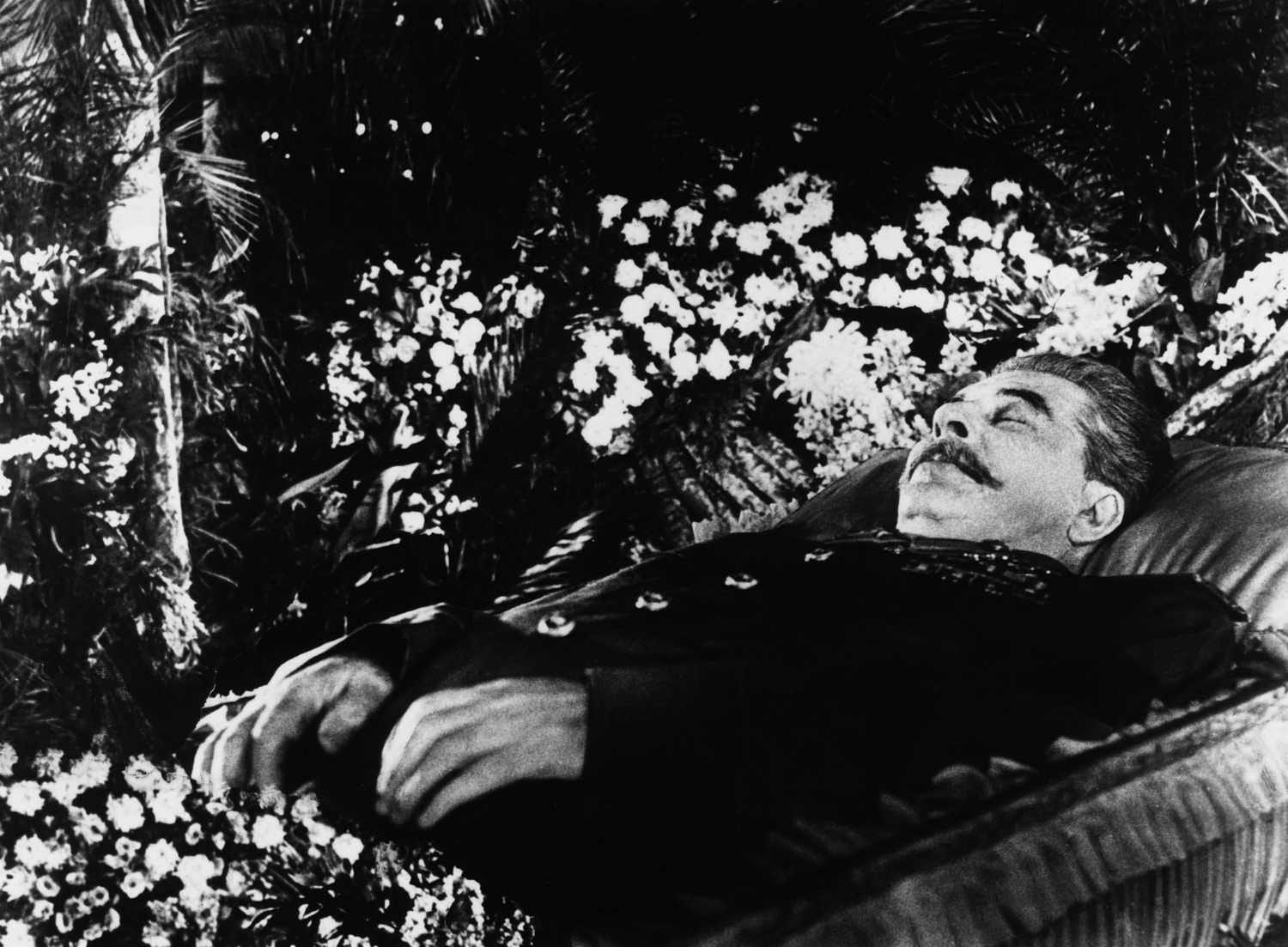
Josef Stalin, the little fellow who killed as many as 20 million people, died 73 years ago today.
Cause of death: antisemitism.
OK, this is sort of creative schadenfreude. But Stalin’s anti-Jewish bigotry absolutely played a role in his demise.
It is often said that racism corrodes the society that tolerates it and the person who harbors it. Antisemitism, in particular, has long been understood as a warning sign that a society is going completely off the rails.
In Stalin’s case, the consequences were not merely metaphorical. His paranoia about Jews may quite literally have hastened his death.
Here’s how it happened.
In 1952, Stalin launched a vicious campaign accusing a group of doctors — most of them Jewish — of plotting to assassinate Soviet leaders. The alleged conspiracy became known as the “Doctors’ Plot.”
Jewish doctors were denounced as traitors, bourgeois nationalists and agents of Western imperialism. Many were arrested. Some were tortured. Several were forced to confess to made-up crimes.
The targets were targets less because they were doctors than because they were Jews. Nevertheless, his campaign of terror against the medical profession spread fear and distrust of doctors generally.
Behind the scenes, Stalin was reportedly preparing an even larger purge that could have included mass deportations of Jews across the Soviet Union.
And because dictators rarely believe their own propaganda halfway, Stalin began purging Jewish doctors from his personal medical team.
Which brings us to March 1953.
On March 1, Stalin suffered a massive stroke at his dacha outside Moscow. According to the historical record, his aides were hesitant to summon medical help.
Why?
One possibility is that they were terrified of waking the dictator unnecessarily and facing his wrath. Stalin didn’t wake up at his usual time and his staff gnawed their fingernails wondering who should go check on him. (This whole drama is explored in the hilarious 2017 dark comedy The Death of Stalin by director Armando Iannucci.)
Another possibility is that they believed the propaganda — that Jewish doctors were actually trying to poison Soviet leaders — and therefore did not want them anywhere near Stalin. After Stalin had vilified doctors in general and Jewish doctors in particular, no one wanted to be the one responsible for having the boss wake up to find Dr. Rabinovich hovering above him.
And then there is a third explanation: Stalin had spent the previous year arresting and terrorizing the very doctors who might have been able to save him. So the best stroke experts (such as there may have been in 1953 USSR) might have been in Siberia anyway.
Whatever the reason, Stalin lay incapacitated for hours — possibly longer — before medical help was summoned.
The delay almost certainly contributed to his death.
On March 5, 1953, Josef Stalin died.
Which brings us to one of history’s darker jokes. (My favorite kind.)
There is an old Jewish story about Stalin visiting a fortune teller who predicts that he will die on a Jewish holiday.
Alarmed, Stalin demands to know which one.
“Passover? Yom Kippur? Which holiday?”
The fortune teller replies calmly: “Any day you die will be a Jewish holiday.”
As it turns out, March 5, 1953 — the day Stalin died — fell on Purim. If that ain’t cause for a l’chaim!
Purim, which Jews celebrated again just this past Monday, commemorates one of the most famous stories in Jewish history.
The story appears in the Book of Esther. In ancient Persia (refresher: that’s Iran now — history repeats), a royal advisor named Haman persuades the king to authorize the extermination of the Jews.
Queen Esther — herself secretly Jewish — courageously reveals her identity, exposes Haman’s plot and saves her people. Haman is executed and the Jews are permitted to defend themselves.
It is, in short, the story of a genocidal extremist in Persia whose murderous ambitions are ultimately defeated.
Which is one reason the holiday resonates so strongly in our own moment.
Because today, once again, the Jewish state finds itself confronting a regime in Persia that has openly declared its desire to annihilate it.
Israel is now at war with Iran.
The parallels are not perfect, of course. History never repeats itself so neatly. But the symbolism is difficult to ignore.
For decades the Iranian regime has called for Israel’s destruction. Its leaders have spoken openly about wiping the Jewish state off the map. It has armed, funded and directed proxy militias across the Middle East whose central mission is the destruction of Israel.
And now that long shadow conflict has burst into open war.
Which makes the Purim story feel less like ancient history and more like an uncomfortable reminder that some things in human affairs do not change very much.
The villain of the Purim story — Haman — is remembered as the embodiment of genocidal hatred. Every year when the story is read aloud, children shake noisemakers to drown out his name.
It is a ritual reminder that societies must confront those who seek their destruction.
Stalin belonged to a similar category of historical monsters.
His regime murdered millions through purges, forced famine, gulags and terror. His late-life descent into antisemitic paranoia was merely the final grotesque flourish of a brutal career.
And yet there is something darkly satisfying about the possibility that the hatred he unleashed ultimately turned against him.
Stalin feared Jewish doctors so much that he purged them.
Then he suffered a stroke.
And the doctors were not there.
History is full of ironies. But few are quite so literal.
There is another lesson worth drawing here.
Antisemitism is often described as irrational hatred — and it is. But it is also something more dangerous than that.
It distorts reality.
It causes societies and leaders to make decisions based on paranoia, myth and conspiracy, rather than reason.
Stalin’s paranoia destroyed countless lives. In the end, it may also have cost him his own.
As Jews celebrated Purim this week — dressing in costumes, reading the Megillah and remembering the story of Haman — it was impossible not to think about how often the same ancient hatreds resurface in new forms.
And how often those who indulge them eventually pay a price.
Stalin certainly did. So did Khamenei and a large number of other top Iranian regime figures.
And history suggests that those who follow the same path rarely fare much better.
Chag Purim Sameach.
*
Follow me on Facebook: https://www.facebook.com/profile.php?id=61588402258315
Follow me on Insta: https://www.instagram.com/patsshtick/
Follow me on X: https://x.com/PatsShtick
*
Some people have generously asked me to make it possible to make one-time contributions to support my work. I have now set up a PayPal link for donations. If you like snappy smackdowns of antisemitism and anti-Zionism and want me to keep it up, any support is deeply appreciated. Click here.
I knew about the "Jewish doctors plot," but it's good to be reminded, esp. at Purim. Thanks!
Wow. For a non-Jew, you certainly "talk" like one.