
STOP ROMANTICIZING DEATH
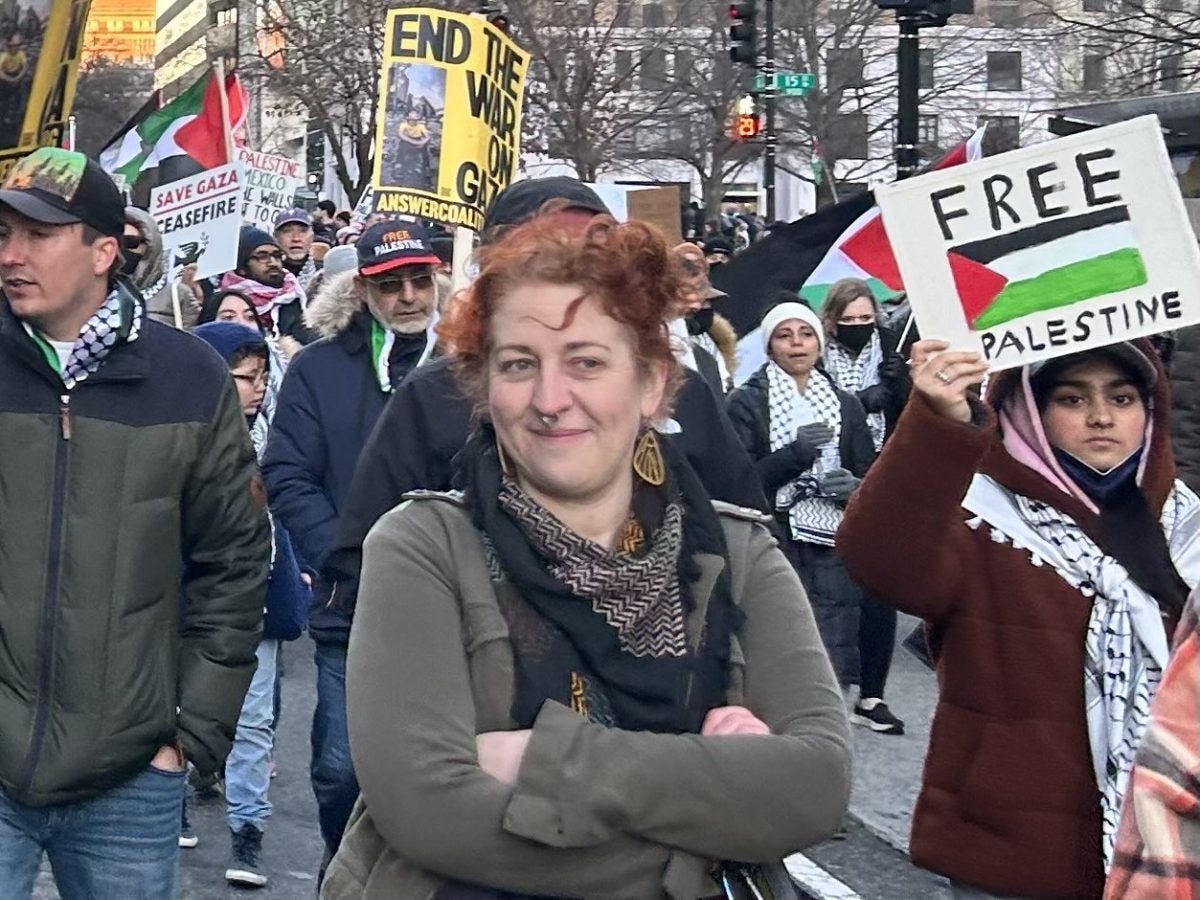
Western kids (by which I mean anyone under 40) are searching for meaning. They find it in piles of Palestinian bodies they themselves help create.

One of the great moral achievements of the 20th century was when we stopped glorifying war.
We still honor courage and respect sacrifice. We still commemorate those who gave their lives defending others.
But somewhere between the trenches of the First World War and the beaches of Normandy, Western civilization underwent a profound moral transformation.
We stopped pretending that dying for one’s country was inherently glorious.
That wasn’t always the case. In August 1914, Europe marched to war almost joyfully. Young men enlisted by the millions. “War poets” celebrated honor, sacrifice, and noble death. Governments promised adventure. Patriotism overflowed.
Then came the trenches, machine guns, artillery, poison gas, and mud.
Millions of young men were fed into a machinery of death unlike anything humanity had ever witnessed. By war’s end, the romantic language had become unbearable. This would be the war to end all wars. Except … well, yeah.
No writer captured that transformation more powerfully than Wilfred Owen.
His poem “Dulce et Decorum Est” dismantled centuries of martial romanticism. Its title comes from the Roman poet Horace: Dulce et decorum est pro patria mori. “It is sweet and fitting to die for one’s country.”
Owen called those words: “The old Lie.”
That sentence changed Western culture.
We no longer looked at war through paintings of charging cavalry. We looked at the shattered bodies of the dead and the shattered psyches of the survivors.
We no longer celebrated the beauty of sacrifice, though we mourned its necessity if the cause, like fighting fascism, was truly just.
War memorials became quieter, less triumphalist, more sorrowful.
The message was unmistakable. If war must occur, let it be because every alternative has failed — not because death itself possesses redemptive beauty.
Not every society has undergone this transformation.
Palestinian society, instead, has gone headlong into the glorification of death. Their language is redolent with “martyrs,” “resistance,” “glorious sacrifice.” Posters celebrate the dead as models to be emulated. Children are taught that martyrdom is an aspiration above self-actualization. Not that self-sacrifice for a just cause is sometimes necessary, but that death itself is better than life.
Every society honors those it believes died defending it. There is nothing unusual about mourning soldiers.
What happens in Palestine is something very different. It is the elevation of death into a political ideal. The concept that dying is the foremost way to advance the cause. That violence is not a last resort, but the first. That enemy civilians are not an unintended casualty of war but its legitimate targets.
I have written about the incitement that drives young Palestinians to aspire to death here.
In the West, society has concluded that war is hell, but victory over enemies is sometimes necessary. However, death is never the objective.
For movements built around martyrdom, civilian deaths are political assets. Every funeral strengthens the narrative and feeds the group’s commitment. Every grave recruits another generation, every image is cherished for its propaganda value.
That is a horrifying inversion of the moral lessons the 20th century ostensibly taught us.
The Palestinian movement — in Palestine and worldwide — takes this inhumanity to more grotesque extremes.
Hamas and other terror entities do not only encourage civilians to martyr themselves — they force them to. Hamas situates their military infrastructures in populated neighborhoods, in schools, kindergartens, hospitals, and mosques.
When war comes to the places where Hamas has entrenched their combatants, civilians are necessarily harmed and killed.
Incredibly, the civilian-to-combatant ratio in the most recent Israel-Hamas war was among the lowest in modern warfare. This is because of the Israel Defense Forces’ meticulous care to minimize casualties.
And what do they get for their efforts at saving Palestinian lives? Accusations of genocide.
Meanwhile, as Israel does everything in its power to minimize the number of casualties, maximizing dead Palestinians is the deliberate Hamas strategy.
Why? Because of a tactic to build global support for Palestinian terrorism and to vilify Israel by tallying the dead, spreading images of atrocity, and eclipsing every other humanitarian disaster on the planet by flooding media and every online platform with the propaganda images resulting from the war Hamas started and the dead they placed in harm’s way.
Again: why?
Follow the bodies.
Western activists, never ones to waste time on context or details, share images of tragedy porn, wrongly blaming Israel for the death and destruction, and Israel becomes a pariah state (thanks in no small part to a predilection in Western civilization to swallow whole the most outlandish lies if they involve Jews).
Perhaps the saddest irony is that many Western progressives — whose grandparents inherited the anti-war wisdom of the First World War — are the very ones feeding the engines of Palestinian destruction by fanatically joining a movement that speaks in precisely the language those war poets rejected.
Of course, who learns poetry anymore?
Israel, for all its flaws, sends its young people into battle hoping they return home.
Hamas celebrates those who do not.
One culture builds bomb shelters to save civilian lives.
The other builds terror tunnels to hold civilian hostages, save the lives of terrorists, and leave civilians above ground to die in the onslaught the elites brought down upon them. Because that is the strategy. Dead Palestinians are a cost of doing business in Hamas’ global PR war. They are not a sad byproduct of war. They are a cost calculation as much as missiles, magazines, and throat-slitting daggers.
To summarize the recurring theme of everything I write: If you are still not sure which side you are on in this goddamned conflict, you need a morality transplant.
For a century, Western civilization has tried to teach itself that the highest calling of a young person is not to die heroically, but to live fully, seek happiness and fulfilment, to fall in love, raise children, build careers, grow old.
That is what peace looks like.
A movement that asks its children to aspire to martyrdom instead of maturity is not liberating them. It is stealing the very future it claims to defend.
And here — somewhere between these two divergent ideals — many young people in the West have fallen between the cracks.
Perhaps the romanticizing of war, which had driven young men of the past to dreams of glory and girls of the past to swoon, were not replaced by a meaningful alternative.
Scratch the surface of the matcha Marxists and the Chardonnay Che Guevaras marching for Palestine in cities across Europe and the Americas and you will find a vacuum where their sense of identity, morality, and ambition should be. They have nothing much to live for (if you don’t count video games, scaring Jews, and shocking the grandparents by out-outlandishing one another with piercings, tattoos and unnatural hair dyes) and so they find meaning the same way young Palestinians do.
By promoting death.
At no cost to themselves, like the chickenhawks who send others to war while remaining safely ensconced in their ivory towers (or, in this case, their parents’ basements), activists play the very role Hamas depends on them to play.
Hamas ensures Palestinians die by the thousands. Overseas activists share the photos on Insta and pour into the streets misplacing blame, and calling passing Jews “baby-killers” and “genocide supporters.”
The nihilistic monsters who lead Hamas get what they want: a willing overseas cheering section condemning Israel (and Jews) in the same bloodcurdling cadences they themselves use.
The overseas youngsters get what they need: some meaning in their lives. The romance of war. The Last Great Cause.
Even if it costs tens of thousands of lives among the very people they claim to support.
Because, just as the “Palestinian liberation” movement is not about “freeing Palestine,” the overseas “pro-Palestinian” movement is not about promoting anything that advances the well-being of Palestinians.
Dead Palestinians are the necessary and welcome fuel that drives the movement.
For directionless kids (by which I count anyone under 40 these days), fighting ennui means glorifying the deaths of others in order to find meaning in their own empty lives.
My husband, reading these words, declares: “You sound like an old coot.”
So be it. But if we want to save our own future and not see it follow Palestinian society down the shitter, we’d better find some way to give the significant swath of misguided, aimless young people in Western societies something constructive to strive for.
Follow me on Facebook: https://www.facebook.com/profile.php?id=61588402258315
Follow me on Insta: https://www.instagram.com/patsshtick/
Follow me on X: https://x.com/PatsShtick
*
Some people have generously asked me to make it possible to make one-time contributions to support my work. I have now set up a PayPal link for donations. If you like snappy smackdowns of antisemitism and anti-Zionism and want me to keep it up, any support is deeply appreciated. Click here.
Great article, Pat.
I just got back from a visit to Ireland, somewhere my husband wanted to visit despite its reputation as one of the more antisemitic countries at the moment. We went on some historical tours, and while most were very nuanced and balanced, one of them, focusing on the Easter Rising, struck me as a glorification of violence and martyrdom. As the guide enthusiastically described suicidal charges against impossible odds and bombs set off in London as late as the 1990s, I was disturbed by how contagious the enthusiasm was for most of the members of the tour group. Needless to say it reminded me of the current enthusiasm in local Canadian "free Palestine" groups for the "martyrs" of the "resistance."
I think it doesn't take much to persuade people that martyrdom is glorious. If one tour guide prone to propaganda could accomplish that in a couple of hours, it's not surprising that an endless stream of tik Tok misinformation can do the same thing on a more permanent level.
Pat, another excellent article. You really do analyze the enemy exceptionally well. You get inside the minds of these people and explain what motivates them better than almost anyone I read.
And you're probably right that many of these young people are searching for purpose. But I'll do you one better: I think our media, universities and progressive governments are actually giving them that purpose.
We look at these kids and ask, where the hell did they all come from? But look at what they're being taught and what their political leaders are reinforcing. Professors tell them Israel is a colonial state. The media feeds them a daily narrative of Israeli genocide. Progressive governments constantly validate the idea that the Palestinians are helpless victims and Israel is the villain.
Look at Canada. During Toronto's Pride parade, someone called out to Mayor Olivia Chow to say “Free Palestine,” and she immediately did it. This is the mayor of a city with one of the largest Jewish populations in North America. So these young people aren't operating in a vacuum. Their professors, media and political leaders are telling them that vilifying Israel is a righteous cause.
When I was young, our cause was the Vietnam War. We believed we were standing against an unjust war. Today's young activists have been handed Israel and the IDF as their Vietnam. They've been told this is their great moral struggle.
And Pat, this is why I keep coming back to the same point with you. You analyze their side brilliantly. I wish you'd turn more of that analytical fire toward our side. Where are we failing? What can we change? What should Jewish organizations, Israel and Diaspora Jews actually be doing differently?
Because we spend an enormous amount of time explaining why the other side is winning the propaganda war. I want us to start figuring out how we win it.
Another terrific article, my friend.