
THE PEOPLE INTERSECTIONALITY BETRAYS
Antisemitism should fit naturally within the progressive understanding of overlapping oppression. Instead, Jews are too often cast as the source of everything the coalition exists to oppose.

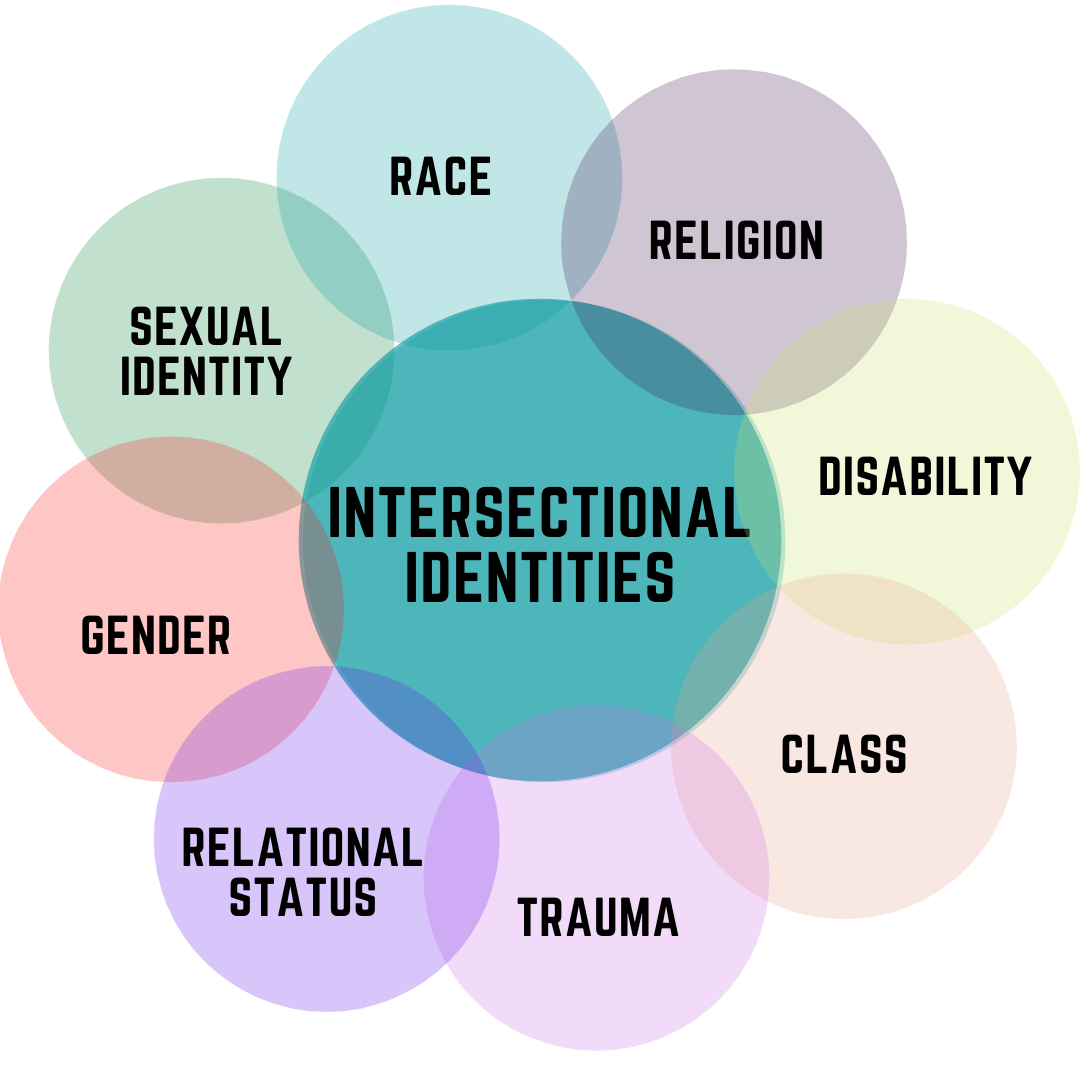
Intersectionality began with a simple and necessary insight: human beings do not experience prejudice one category at a time.
A person may be Indigenous, lesbian, and disabled. Each identity shapes how she is perceived and treated in the world, and how she responds to that reality. But the effects are not stacked like separate boxes. Her experiences of sexism may be affected by racism. Her access to disability services may be affected by poverty, geography, or homophobia. She may encounter barriers that cannot be understood by examining Indigeneity, sexuality, gender, or disability in isolation.
That is intersectionality in its most familiar, personal form.
The term was introduced by American legal scholar Kimberlé Crenshaw to explain how Black women could fall through the cracks of systems that recognized discrimination against Black people and discrimination against women, but failed to recognize the distinctive discrimination experienced by Black women. They were told, in effect, to divide themselves into parts before the law and society could see them.
Intersectionality insists on seeing the whole person.
Over time, the concept expanded beyond individual identities into a broader analysis of social systems. Climate change can disproportionately affect economically disadvantaged communities, Indigenous peoples and women. Economic inequality can intensify racial disparities. War can magnify gender-based violence. Housing policy can intersect with disability, immigration status, and family structure.
Is all of this technically “intersectionality”?
Broadly, yes, though sometimes the term is stretched so far that it becomes a synonym for “everything is connected.” More precisely, intersectionality examines how identities and systems of power overlap to produce particular experiences. The claim that climate change, patriarchy, colonialism, and economic inequality reinforce one another is often described as an intersectional analysis. It can also be called systems analysis, structural analysis or an examination of interlocking oppressions.
Whatever terminology we use, the basic moral insight is sound: injustice does not occur in sealed compartments.
Which raises an obvious question.
Where are the Jews?
Antisemitism should be a natural part of intersectional analysis. It crosses almost every category the framework claims to recognize. Jews have been persecuted as a religion, an ethnicity, an imagined race, a foreign nation, a social class, and a perceived global conspiracy. They have been accused of being too poor and too rich, too insular and too cosmopolitan, capitalist exploiters and communist revolutionaries, racial inferiors and racial supremacists.
Antisemitism intersects with nationalism, religion, race, migration, class, gender, and sexuality. Jewish women encounter distinct forms of antisemitic misogyny. LGBTQ+ Jews can be pressured to choose between their Jewish and queer identities. Jews of color may face racism outside Jewish spaces and the erasure of their Jewishness within anti-racist ones. Mizrahi, Sephardi and Ethiopian Jews frequently disappear from political narratives that imagine all Jews as white Europeans.
A serious intersectional movement should find antisemitism intellectually fascinating and morally urgent. Arguably, Jewish concerns and antisemitism are (or should be) Exhibit A in the Diagnostic Manual of Intersectionality.
Instead, Jews are often the exception in the intersectional imagination. It is almost as if intersectionality was invented in a world where Jews do not exist.
This is not because Jews lack a history of oppression. Few peoples possess a longer or better documented one. It is because antisemitism has spent roughly a hundred generations preparing the Jew for a very specific social role: not victim, but explanation.
Jews have not merely been hated. They have been used.
When it comes to intersectionality, I have only recently come to understand, something more is at play. It is not that intersectionality was invented in a world where Jews seemingly do not exist. Conversely, and quite consciously, it now seems to me, Jews play a very special role in intersectionality — precisely the same role they have played for centuries in the very racisms intersectionality is supposed to ameliorate.
Quick history: When societies experienced disease, Jews were accused of poisoning wells. When a child disappeared, Jews were accused of ritual murder. When economies collapsed, Jews were blamed for finance. When workers revolted, Jews were blamed for communism. When nations lost wars, Jews were accused of betrayal. When modernity unsettled traditional life, Jews were blamed for secularism, feminism, immigration, capitalism, socialism, liberalism, and cultural decay.
The allegations changed because the social anxieties changed.
The Jew remained, an empty vessel onto which the fears, anxieties, hatreds, and assorted neuroses of others were projected.
This is the genius of antisemitism. It does not simply portray Jews as an oppressed minority. It portrays them as the hidden force behind oppression itself.
That makes antisemitism uniquely difficult for contemporary progressive frameworks to recognize. Intersectional politics tends to sort society into the powerful and the powerless, the privileged and the marginalized, the oppressor and the oppressed. Antisemitism enters this binary and whispers: Jews are not vulnerable. Jews are the powerful people behind the curtain.
Jews may be a tiny minority, but antisemitism imagines them as omnipresent. Jews may have been expelled from country after country, but antisemitism imagines them as controlling governments. Jews may have survived genocide, but antisemitism recasts survival as privilege. Jews may face violence, but their alleged proximity to whiteness, wealth, or Israel is used to disqualify their fears.
The ancient scapegoat has been updated for the language of social justice.
The medieval Jew was blamed for killing Jesus. The modern Jew is blamed for capitalism, colonialism, white supremacy, and global inequality. Israel is increasingly presented not as one nation among many, with virtues, failures, conflicts, and contradictions, but as the concentrated embodiment of every evil the intersectional coalition opposes.
Israel becomes colonialism. Zionism becomes racism. Jewish communal organization becomes lobbying power. Jewish concern about antisemitism becomes an attempt to silence others. Jewish self-defence becomes aggression. Jewish trauma becomes manipulation of gentile guilt.
The Jew is not excluded from the intersectional system. The Jew is assigned a very specific role within it: the villain connecting all the other injustices.
This explains a phenomenon that otherwise seems baffling. Movements devoted to protecting minorities have become hostile to one of the world’s oldest minorities. Activists trained to respect self-identification tell Jews that Jewishness is merely a religion, that Jews are not a people, or that Zionism has nothing legitimate to do with Jewish identity. People who insist that outsiders should listen to lived experience lecture Jews on what antisemitism really is.
Every other group is encouraged to define its own oppression. Jews must submit theirs for approval.
Jews are not being ignored by intersectionality. They are actively cast by intersectional analysis and activists in the precise role that racists have forced Jews for millennia: The source of all evil. The handy solution to all our problems. The explanation for every unanswered question. The scapegoat for anything and everything that goes wrong.
Intersectionality says everything is related — climate change, social inequalities of every form, economic injustice — and then, as often as not, explicitly or implicitly, it blames the Jews.
Let me make this crystal clear: It doesn’t have to be this way. Intersectionality is real. An economically disadvantaged Black woman with a learning disability faces overlapping oppressions and challenges, and her needs and differences must be addressed in this context. Denying intersectionality is like denying gravity. It exists.
The problem is that the oldest hatred has seeped into intersectionality the way it has seeped into everything.
And just like everything else antisemitism touches, it desecrates it. By allowing antisemitism to putrefy intersectionality, activists have undermined their own good intentions.
Antisemitism has always served as a distraction. Rather than addressing the real (often complex and confounding) causes of social problems, antisemitism provides easy answers (“It’s the Jews!”) and subverts attempts at deeper systemic reform.
For centuries, societies poured their anxieties into an imaginary vessel called “the Jew.” Today, some activists pour colonialism, capitalism, racism, militarism, and inequality into the same vessel and congratulate themselves for having discovered the source of oppression. (Usually they call the vessel “Israel” or “Zionism.”)
They have not transcended the ancient scapegoat.
They have intersectionalized it.
Intersectionality needs to confront its antisemitism problem — if not for moral reasons (because antisemitism is evil in itself), then because this one defect in the system is the poison pill that will destroy the entire undertaking.
An intersectionality movement that is antisemitic cannot stand. It will eventually implode of its own internal contradictions.
That doesn’t mean the reality of intersectionality — a genuine, imperative understanding of human inequality — will cease to exist.
On the contrary. The injustices intersectionality recognizes will remain.
It is the movement challenging those injustices that will cease to exist or to constructively address the problem.
Many Jews have understandably given up on the concept of intersectionality, recognizing it as riven with antisemitism.
Intersectionality advocates, though, can give up on Jews only at their own peril.
Intersectionality’s Jewish problem is the booby trap set to blow intersectionality into shards. Either they quit denying the calamitous problem and eradicate the toxin, or give up altogether on the ostensible goal of confronting injustice and inequality.
Follow me on Facebook: https://www.facebook.com/profile.php?id=61588402258315
Follow me on Insta: https://www.instagram.com/patsshtick/
Follow me on X: https://x.com/PatsShtick
*
Some people have generously asked me to make it possible to make one-time contributions to support my work. I have now set up a PayPal link for donations. If you like snappy smackdowns of antisemitism and anti-Zionism and want me to keep it up, any support is deeply appreciated. Click here.
Pat, another thought-provoking article.
Where I part company is with intersectionality itself. I understand its original intent, but I think we've taken it far beyond common sense. Once we start breaking every human being down into overlapping categories of oppression, where does it end? Every one of us has strengths, weaknesses, hardships, and advantages. I was raised by deaf parents. Where do I fit on the intersectionality scale?
To me, we've moved away from judging people as individuals and toward judging them by an endless checklist of identities. That's a step backward, not forward.
As far as the Jews are concerned, I think intersectionality has simply become the latest framework used to justify hating us. Throughout history, Jews have been blamed by the left, blamed by the right, blamed by socialists, blamed by capitalists—and now we're blamed through the language of intersectionality. The vocabulary changes, but the scapegoat stays the same. We're simply the perfect prey.
That's why your article resonated with me. It isn't really about intersectionality. It's about the oldest hatred finding yet another modern way to reinvent itself.
There is a fundamental misunderstanding of how Jew-hatred works. Racism typically casts its targets as inferior outsiders. Jew-hatred does something entirely different. It constructs the Jew as a cosmic villain, not merely an outsider, but one with the hidden power to corrupt and control the world. The Jew, in this framework, isn't marginal: the Jew is pulling the strings. This is why Wilhelm Marr, who coined the term “antisemitism,” wrote the “victory of Judaism over Germandom,” and why Ilhan Omar tweeted in 2019 that “Israel has hypnotized the world. May Allah awaken the people and help them see the evil doings of Israel.” Across all three historical phases, antijudaism, antisemitism, and antizionism, the logic is consistent: take whatever a society holds as sacred, then accuse Jews of being the villains desecrating it. Today, the reigning moral framework is human rights. The United Nations, today’s church, was built around protecting human rights. And the gravest sins within that framework have names: racism, colonialism, genocide, apartheid. So when antizionists label Israel a racist, apartheid, genocidal, colonialist state, they are not simply levelling policy criticisms. They are deploying the most powerful moral accusations available in contemporary society. Calling Israel “racist” today functions exactly as calling Jews “Christ-killers” did in medieval Europe; it's the same structure, updated for a new moral language. The problem is that because we do not have distance from the antizionism era the way we do from the previous two eras of Jew-hatred, we really believe that this new hate is virtuous. Credit to: https://nayalekht.substack.com/